

From Research to Your Mailbox: The Journey of the Minaret Letters
- Kristine Brey
- Oct 31, 2025
- 3 min read

Updated: Jan 26
If you’ve ever wondered where to findeducational Islamic history letters in the U.S. — something both beautiful and meaningful for your family — you’re not alone. Parents, teachers, and lifelong learners often search for Islamic historical stories that bring the past to life. The Minaret Letters were created to do exactly that: to deliver authentic stories of our history and heritage, straight to your mailbox each month.
Each envelope carries more than just a story — it’s a small journey through time, art, and discovery. But how do these letters come to life? Let’s take you behind the scenes.
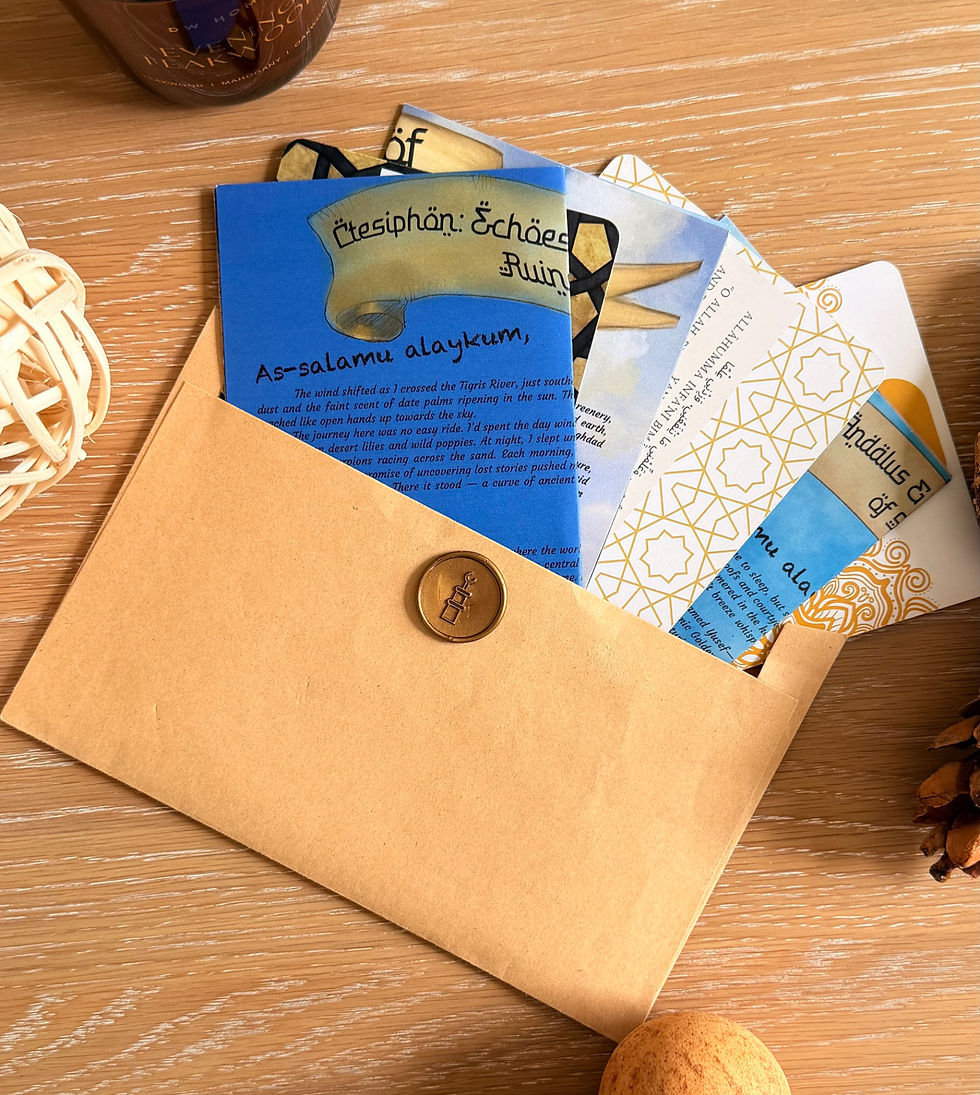
Choosing Each Month’s Story
Every letter begins with a single question: What piece of history deserves to be explored this month? Some months explore great centers of knowledge like Baghdad, Timbuktu, or Al-Andalus. Others uncover the stories of forgotten inventors, explorers, and libraries that helped shape the world. Each topic is chosen to spark curiosity, connection, and pride — reminding readers that Islamic history is full of adventure, creativity, and wonder.
Every letter connects to the next, following Aali, our curious traveler. He journeys from one place to another, with each destination inspiring the next. This approach weaves all the stories into one continuous voyage through time.
Where Inspiration Comes From
Sometimes, inspiration begins with a children’s book and then deepens through a scholar’s translation of a 9th-century text. Other times, it’s sparked by current world events or the intricate design of a forgotten coin. The research behind each letter is both deep and wide. It starts with online searches for books, scholarly discussions, and translatable texts. Often, it leads to hours spent reading, comparing notes, and studying old maps and historical archives that bring each story to life.
Each month is a journey of its own. We blend our character into the present day and then transition to historical accuracy. The storytelling feels alive, personal, and full of heart.

The Writing Process
Some stories begin in notebooks as quick notes about what our character may be seeing or feeling. They then take shape directly on the computer. The process is both historical and creative. It requires a careful balance between research and readability. Every detail is considered: which moments bring the world of the story to life, and which might distract from its essence?
The goal is always to make the past feel real — not distant or abstract, but tangible and human. Each letter goes through several stages of writing and revision. The aim is to keep every story within 800–1000 words — enough to capture its depth without losing its heartbeat. It’s a challenge since each tale holds so much history, but that limitation forces every word to count.
Illustration & Design
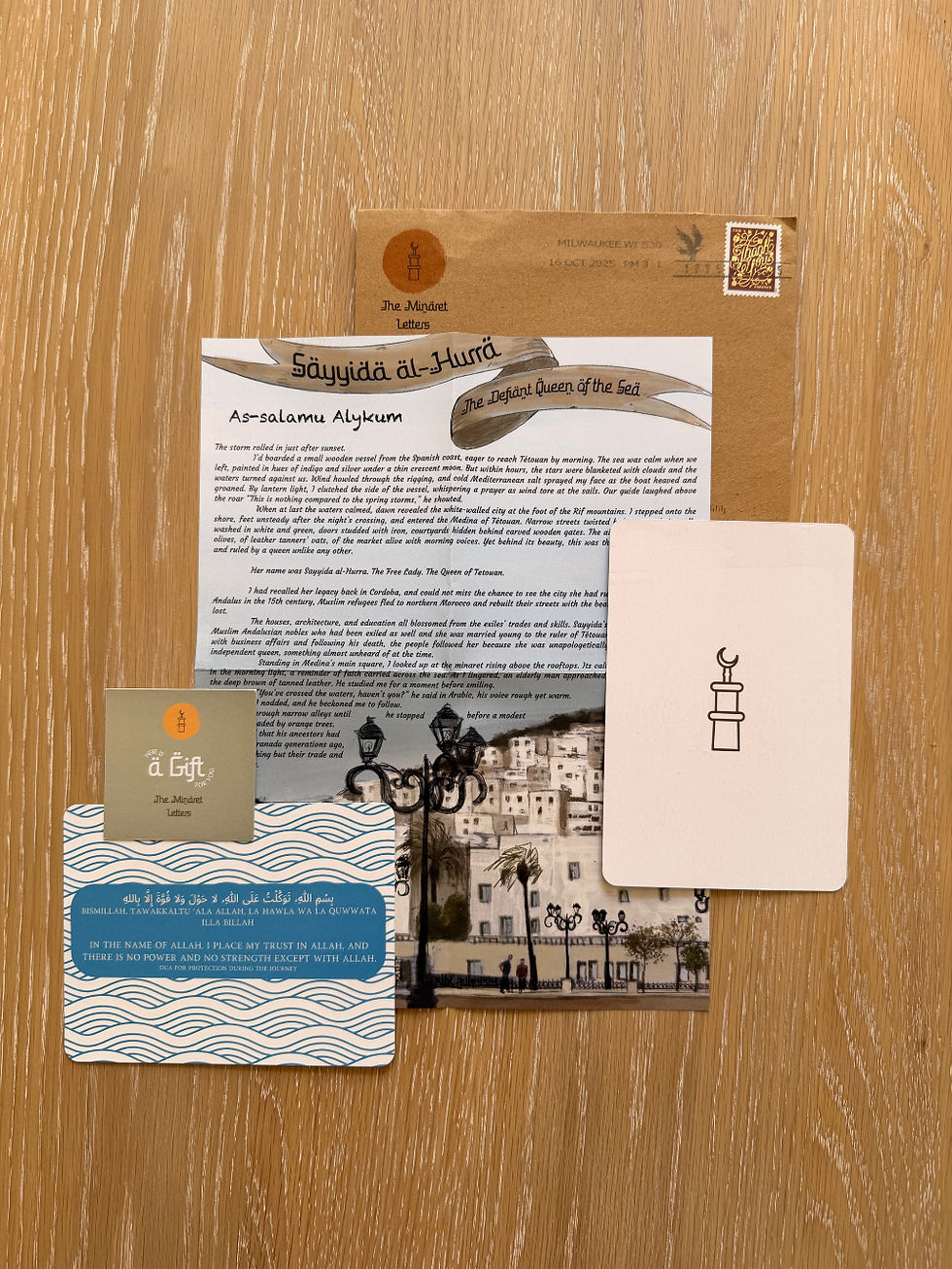
Each Minaret Letter is paired with hand-illustrated artwork that breathes life into the story. These illustrations capture not just what happened, but how it might have felt to be there. They go beyond visuals; they serve as windows into another time. They help readers sense the texture of ancient walls, the hues of forgotten landscapes, and the emotions etched into history.
Through digital art, we aim to make each scene a bridge between imagination and knowledge. Learning becomes something you can see, feel, and remember.
Conclusion
The Minaret Letters offer a unique way to explore Islamic history. Each letter is a treasure trove of stories, art, and knowledge. They are perfect for families, educators, and anyone curious about the rich tapestry of our past.
We would love to hear your thoughts on it. Feel free to contact us if you have any questions or to share your experience with us.
Comments